
Experiences of Japanese Americans under the AEA
Chozo Saito — Promising Lives Interrupted
My great-grandfather Chozo Saito was born on May 5, 1885, in Toukitate-machi, Fukushima-ken, Japan. As the eldest child in a successful family, he was entitled to inherit the family land. Nevertheless, he believed in the promise of the American dream, and he decided to take a risk, coming to America to build a better life for himself. He came through Hawaii in April 1906, working on a sugar plantation and making eight dollars a week. Chozo arrived in San Francisco in July, shortly after the 1906 earthquake, and worked as an itinerant laborer until he settled in the Vacaville farming community.
In 1920, he returned to Fukushima to marry Haru Watanabe in an arranged marriage. They returned to Vacaville in 1921, where they raised four children: Joseph, Lilly, Mako, and Charlotte. The family lived in a beautiful two-story Victorian house, with a ballroom and stained-glass windows, on the 200-acre Dickinson Ranch that Chozo and his business partner, Mr. Hayashi, leased in the Lagoon Valley. The primary crop was prunes. Working on the farm was incredibly labor-intensive, but they built their business, and over time they hired many field workers, for whom Haru cooked and helped house. While most farming families put their children to work from an early age, Chozo was more lenient. He did not allow Joseph to work until he was sixteen and did not require any of his children to work the fields. Mako was allowed to work for days on multi-page-long math proofs, which was his passion, and his sisters had a fine time with a cat named Ghost and a host of pets.
In his free time, Chozo was an avid fisherman. Joseph recalls going on fishing trips with his father in Suisun. Chozo was also deeply involved in the Vacaville community. He was the vice president of the Hokubei Butoku Kai, a martial arts school in Vacaville, and an officer at the Kendo Association, where Joseph and Mako learned fencing. These positions were used against him following Japan's attack on Pearl Harbor, when hostility toward the Japanese grew. There was an informant in the community who had been gathering information about Chozo and other community leaders. Because the Kendo Association was connected to the Dragon Society, which was considered a pro-Japan organization, Chozo's role overseeing the discipline of the association's young Japanese members was reason enough to label him a potentially dangerous "enemy alien."
On March 28, 1942, the FBI came to the family home to arrest Chozo without notice or charges. Joseph was studying horticulture at UC Davis at the time and recalls learning of the arrest: "Dad has been pulled in by the FBI. We don't know where he is."
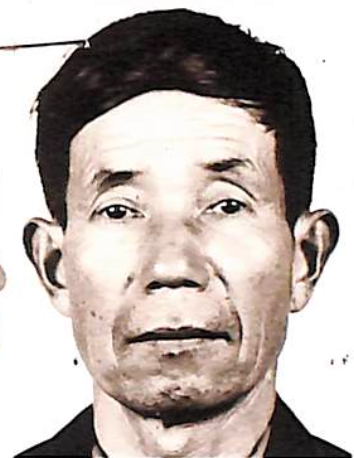
Chozo was fingerprinted, photographed, and questioned. He was five foot one and of slight build. He had $28 to his name and no way to contact his family. After spending three days at the Angel Island Fort McDowell military base for initial processing, Chozo cycled through multiple Department of Justice camps. From Angel Island, he was sent to the Sharp Park Detention Center in Pacifica, California, and then taken back to Angel Island awaiting transfer to Lordsburg and Santa Fe, New Mexico, where he was incarcerated with other community leaders.
Living in camps that were often in poor condition and constantly being moved was incredibly stressful for Chozo. He did not know if he would ever see his family again. He worked tirelessly to reunite with them, participating in many hearings to re-evaluate his case and reaffirm his loyalty to the United States. However, it was not guaranteed that he would be released. The stress impacted his health. At one point during his incarceration, he weighed all of 105 pounds, and his pre-existing rheumatoid arthritis worsened.
In May 1942, the rest of the family was forced to upend their lives, leaving their belongings and pets to go to the Gila River Relocation Center. Being in the camps without Chozo was also hard on the family. Lilly in particular felt her father's absence. She was a gifted pianist and was accepted to college to study music. At the same time, she did not want to leave her family behind in the camp and felt lost without her father's guidance. Haru's health was also beginning to decline. Nonetheless, they both wrote letters and collected testimony from people close to Chozo that emphasized his honest and trustworthy character. Lilly wrote five letters, including one to President Roosevelt pleading her father's case. On September 24, 1943, Chozo was finally granted permission to join them at Gila River. It was the first time the family had seen him in over a year.
When they were finally released, Chozo's once-thriving business, along with the family's home and all of their belongings, was gone. Joseph and his siblings helped them resettle in Sacramento. Fortunately, they did not have to start completely from scratch, because they had some savings that Chozo's colleague, Mr. Macquarie, had kept in trust while they were gone. They still struggled to rebuild their lives. Chozo's arthritis continued to progress, so he could no longer work and had lost some ability to speak clearly. My great-grandmother took a job at the Del Monte Cannery to support the family. By the time Chozo was in his late sixties, his hands were twisted and crippled, and he was barely able to walk, with a painful, shuffling gait, leaning on his devoted wife.
Chozo is remembered in the family as a kind and gentle soul. He was a simple and hardworking man who would do anything for his country. His time in the camps not only cost him his health and dignity, but it also cost him the business he had painstakingly built over the course of twenty-five years. His children also sacrificed a great deal, putting their dreams on hold or leaving their dreams with the lives they left behind. After leaving UC Davis to go to camp, Joseph never received his degree, despite working in a research lab there for thirty-five years. Lilly felt obligated to care for her parents and never got the opportunity to study or pursue a career in music. Mako was drafted into the U.S. Army and put his career on hold to serve. After fulfilling his service, he became a mathematician at IBM, where he worked his entire life. Charlotte could not afford college tuition, so she studied nursing at UC Berkeley, which offered her a full scholarship to the psychiatric nursing program. Chozo's children didn't realize all their dreams, but they found different paths.
Written by Charlotte Sandford, great-granddaughter of Chozo Saito, with contributions from Sandra Doi, granddaughter of Chozo Saito.
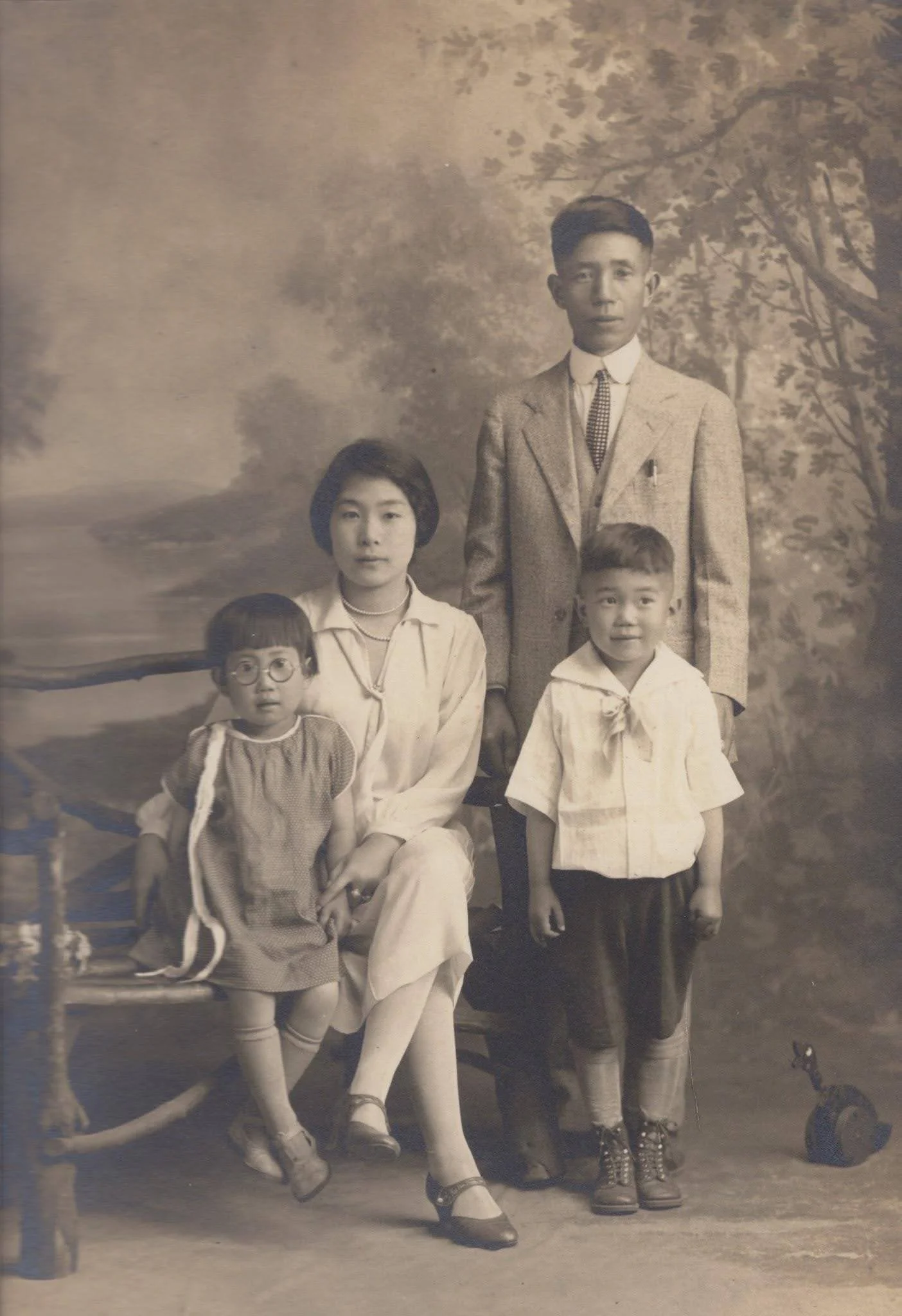
1. A Family portrait of Chozo Saito with his wife Haru, eldest daughter Lily (both seated), and eldest son Joseph
2. Chozo Saito’s mugshot included in his DOJ Alien Enemy Report taken at the Angel Island immigration station in San Francisco, California on July 30th 1942.
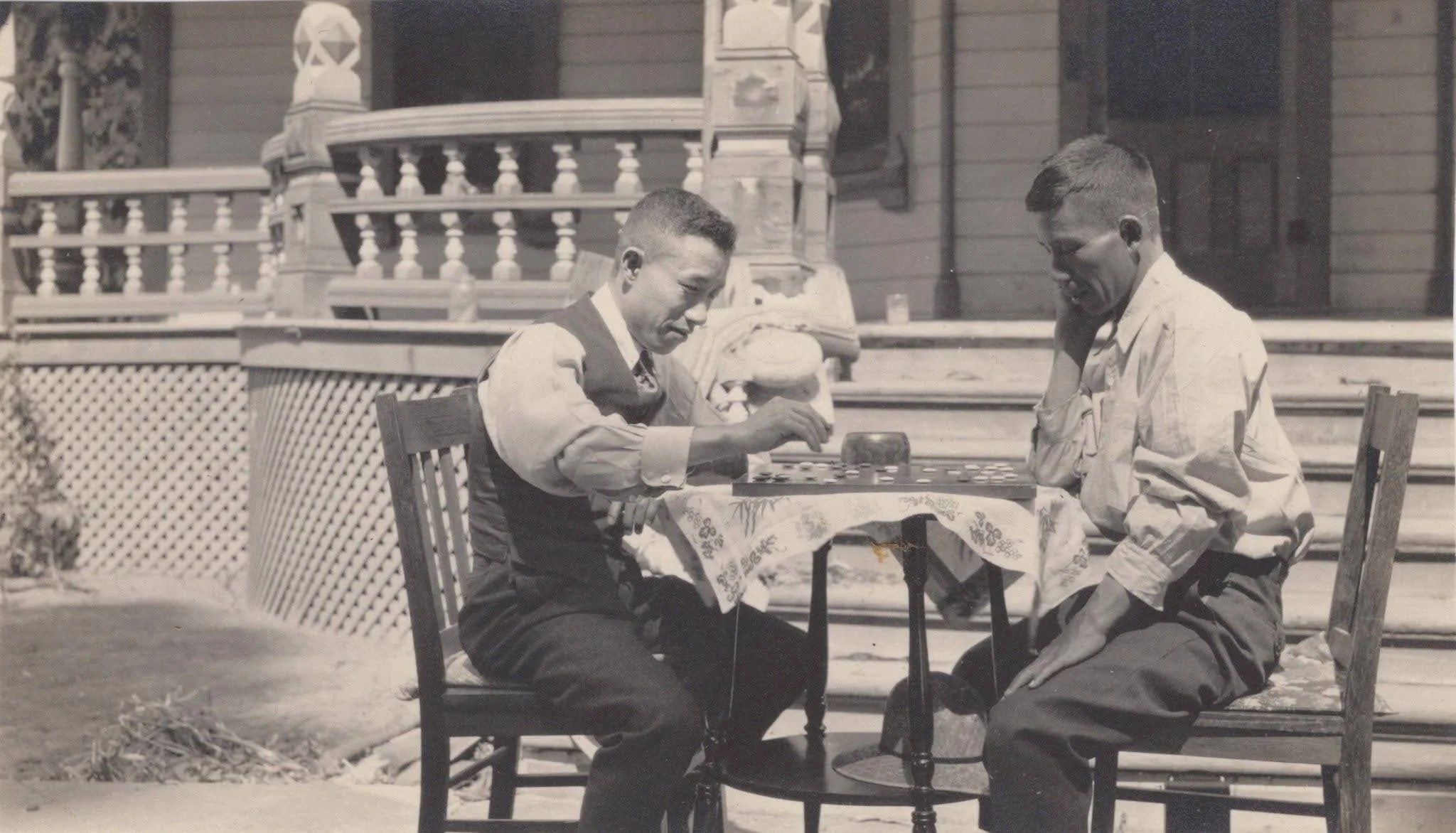
3. Chozo Saito (right) playing chess with his friend in front of the family home in Vacaville, California
Want to hear about more experiences of others under the AEA? Click a name below to learn more.