
Experiences of Japanese Americans under the AEA
Isamu Art Shibayama — From Childhood in Peru to Incarceration in Crystal City, Texas
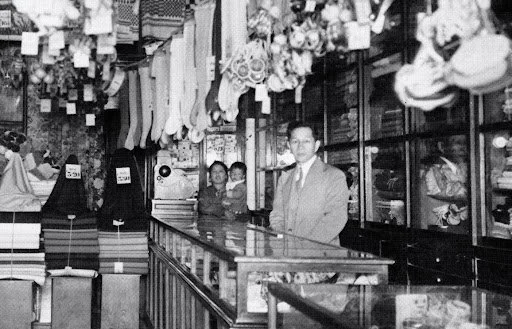
Kinzo and Misao Ishibashi (holding grandson Isamu Shibayama) at their merchandise store, Callao, Peru, 1931.
My father, Carlos Isamu “Art” Shibayama, the first child of Yuzo and Tatsue Shibayama, was born on June 6, 1930, in Lima, Peru. His three sisters (Elisa Fusako, Yolanda Kikue, and Rosa Akiko) and two brothers (Javier Kenichi and Jorge Takeshi) followed in the next eight years.

Shibayama children, Lima, Peru, 1939.
(From left: Carlos Isamu, Elisa Fusako, Yolanda Kikue, Rosa Akiko, Javier Kenichi, Jorge Takeshi)
The Shibayama family enjoyed a comfortable and peaceful life in a large home in Lima, Peru, and Yuzo ran a thriving import-export business. Isamu and his younger siblings attended private Japanese schools, where they were taught in both Japanese and Spanish.
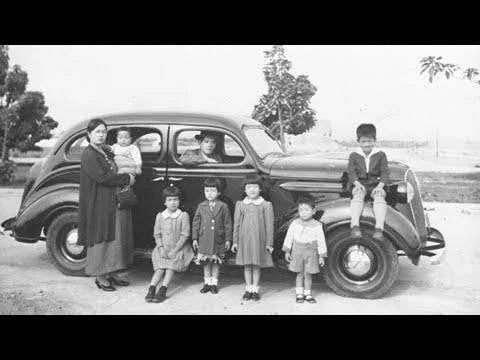
Shibayama family at a park, Lima, Peru, 1939.
On March 1, 1944, the Shibayama family of eight was taken into custody in Lima and forced to board the US Army Transport Cuba under armed guard at the port of Callao. No warrant or explanation was given. During the arduous 21-day journey from Peru through the Panama Canal to the United States, Yuzo and 13-year-old Isamu were kept below deck with men and older boys while Tatsue and her young children were packed into a small cabin with another family. When the ship arrived in New Orleans, the prisoners were led to a warehouse where soldiers ordered them to strip naked and line up as they were sprayed with DDT. The women and younger boys and girls were led en masse through the warehouse first followed by the men and older boys.
At Camp Algiers in New Orleans, the Shibayamas were classified as illegal entrants because they could not present the identification documents and papers that the U.S. military had confiscated en route and never returned. Furthermore, they were processed as “enemy aliens” under the Alien Enemies Act by the Immigration and Naturalization Service. Communication was difficult since the Shibayamas could only speak Japanese and Spanish and did not understand English.
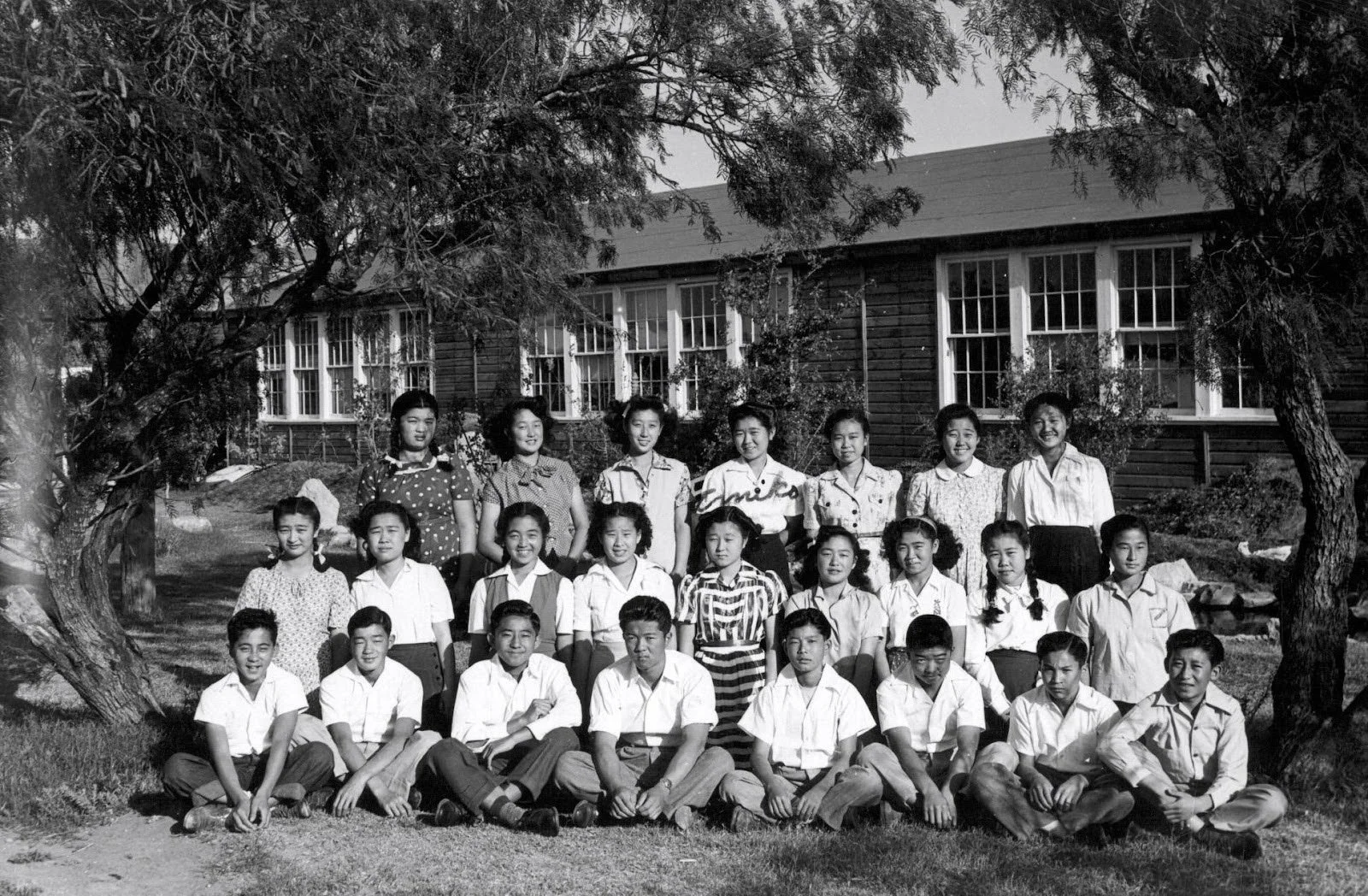
Japanese Peruvian students in front of Japanese school at Crystal City Family Internment Camp, Texas, ca. 1945-6. Isamu (bottom row, 4th from left) and Fusako (middle row, 3rd from left)
The Shibayamas were imprisoned in Crystal City Family Internment Camp in Texas from March 1944 until September 1946, one year after the end of WWII. During their entire internment, Yuzo planned to return with his family to Peru. However, Peru initially would not allow Japanese Peruvian internees to return, even if they were Peruvian citizens or married to citizens.
At the end of the war, Presidential Proclamation 2662 (issued on September 8, 1945) authorized the DOJ to deport enemy aliens, who were brought from Latin America and remained in the U.S., to destinations outside the Western Hemisphere. The Shibayamas fought deportation with the assistance of Attorney Wayne Collins, Sr., of the ACLU and were paroled out of camp in September 1946 under the sponsorship of Seabrook Farms in New Jersey. At Seabrook Farms, teenagers Isamu and Fusako had to forego their education to work in various farm labor jobs. Their father needed help supporting their large family given the cheap wages, and their mother was pregnant.
In March 1949, the Shibayamas resettled in Chicago after receiving sponsorship there. They were still stateless and living under the constant threat of deportation. For years, Isamu and his family attended mandatory deportation proceedings and hearings until they could become permanent residents pursuant to a 1954 amendment to the Refugee Relief Act.
Yuzo spent the rest of his life trying to regain the wealth and stature that he had achieved in Peru; tragically, he never did. Later in life, Yuzo became depressed and isolated. My family and I believe that the U.S. government killed my grandfather’s spirit. I only knew him as a shell of his former self.
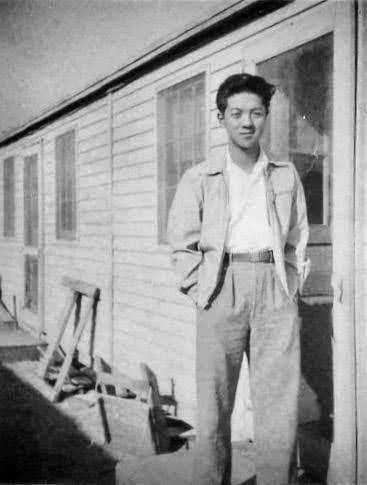
Isamu Shibayama in front of barrack, Seabrook Farms, NJ, ca. 1946-7.
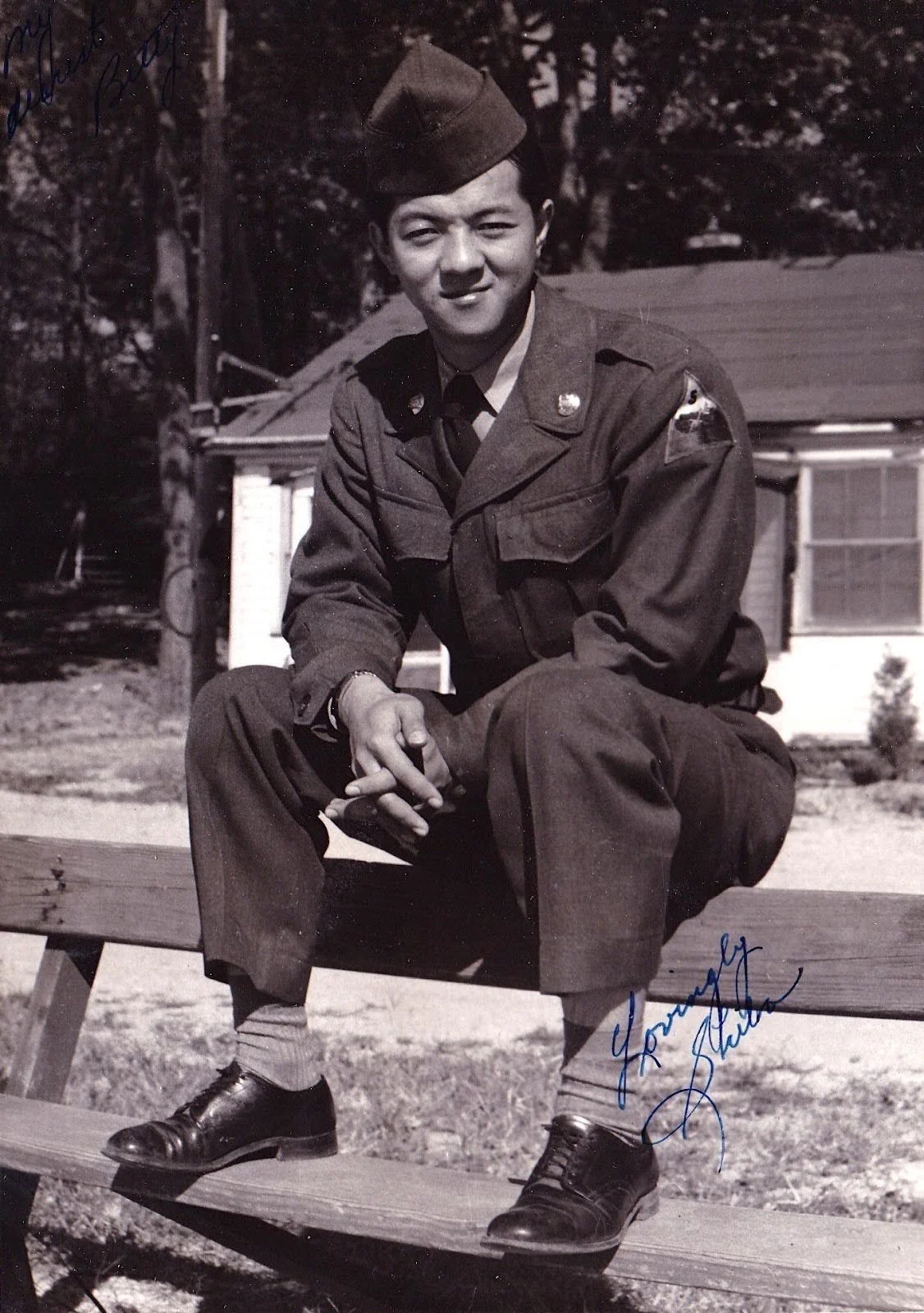
Isamu Shibayama during a visit to Seabrook, NJ, ca. 1952-4.
Isamu, who had envisioned a bright future attending college and taking over Yuzo’s successful business in Peru, was unable to attend school past the age of 16. While still classified as an “illegal alien,” he was drafted and served in the U.S. Army during the Korean War and continued serving in a Reserve unit until his honorable discharge in May 1960. Of the many devastating losses and hardships that my father suffered, the most grievous was never seeing his beloved grandparents, Kinzo and Misao Ishibashi, again after they were seized from Peru in June 1942, interned in the U.S, and forcibly sent to Japan in a prisoner exchange in September 1943.
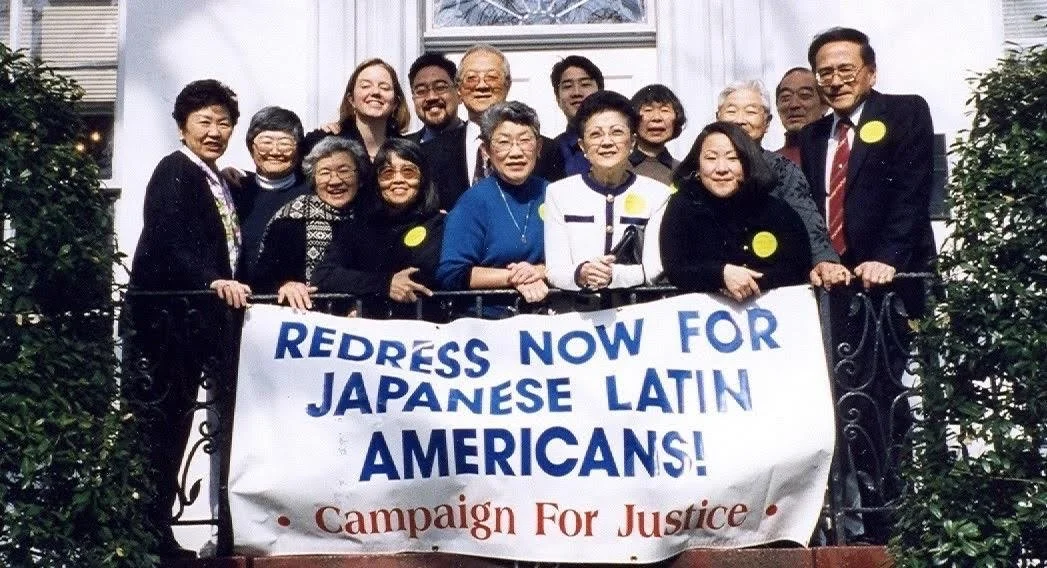
Campaign for Justice Delegation to Washington, DC
Isamu was determined to hold the U.S. government accountable for its human rights violations in order to prevent recurrences from affecting other families or communities. After Japanese Latin Americans (JLAs) were excluded from the Civil Liberties Act of 1988 because they were not U.S. citizens or legal permanent residents at the time of their internment, Isamu and other JLAs founded the Campaign for Justice: Redress NOW for Japanese Latin Americans! and pursued litigation and legislative remedies in the United States.
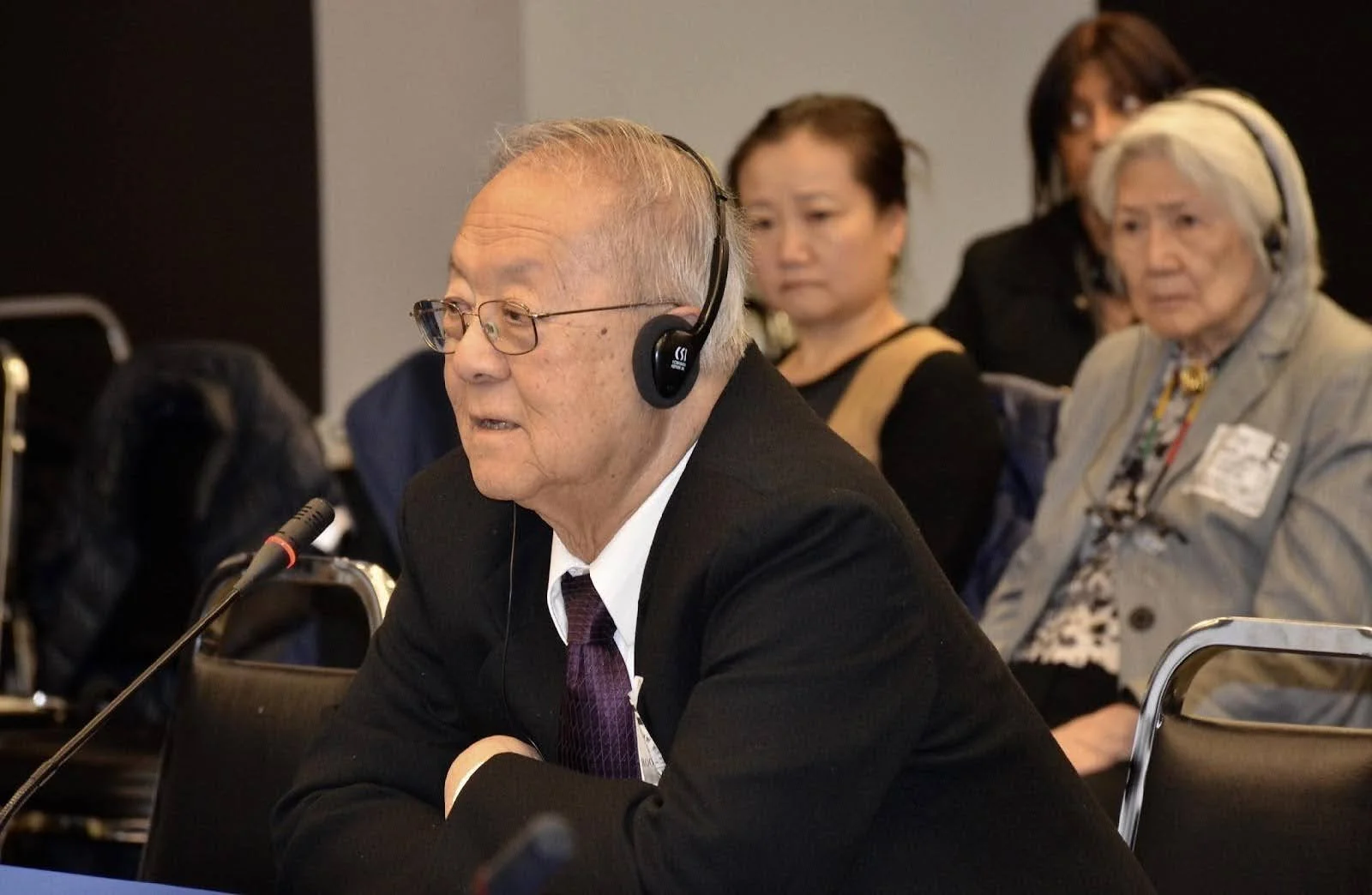
Isamu testifying at the IACHR hearing, Washington, DC, 2017.
Unable to find justice in either the U.S. courts or Congress, Isamu and his brothers took their case to the Inter-American Commission on Human Rights (IACHR) in 2003. In 2019, the IACHR issued a groundbreaking decision in Shibayama, et al v. USA, Case No. 12.545, affirming Japanese Latin Americans’ right to full and equitable redress for, among other things, their time spent interned pursuant to the Alien Enemies Act of 1798. In this decision, the IACHR emphasizes that the principles of equality before the law, equal protection, and non-discrimination are among the most basic human rights. Significantly, the Shibayama decision emphasizes that states must ensure equal protection of the law to all persons, regardless of their citizenship or immigration status, and reaffirms the obligation of the U.S. government to provide both access to information about and meaningful “material and moral” redress for longstanding violations of human rights. The U.S. has yet to comply with the Commission’s decision.
Background:
During WWII, the U.S. government went outside its borders and violated the human rights of over 6,000 men, women, and children of Japanese, German, Italian, and Jewish ancestry in 18 Latin American countries. Of these, 2,264 were of Japanese ancestry, both citizens and permanent residents of 13 Latin American countries; approximately 1,800 from Peru. Empowered by the Alien Enemies Act of 1798, the Roosevelt administration seized, detained and unlawfully removed the national identity of these Latin Americans—all labeled “potentially dangerous enemy aliens”—in the name of hemispheric security and for the purpose of prisoner exchanges.
The Japanese Latin Americans were seized from their homes and communities, forcibly deported, stripped of their passports and identification papers, and transported over international borders to the United States. Upon arrival in the U.S., the government justified its control over the prisoners by declaring them to be “illegal aliens” and interning them in DOJ camps, without any due process.
Many Japanese Latin Americans were subjected not only to the Alien Enemies Act detention authority but also its deportation power. 845 Japanese Latin American internees were deported in two prisoner exchanges between the U.S. and Japan in June 1942 and September 1943. At the end of the war, over 900 Japanese Peruvians were deported to war-devastated Japan.
Written by Bekki Shibayama, daughter of Art Shibayama
References:
Campaign for Justice: Redress Now for Japanese Latin Americans
https://jlacampaignforjustice.org/
Enemy Alien Files Online Exhibit
https://njahs.org/enemy-alien-files/online-exhibit-enemy-alien-files/
Hidden Internment: The Art Shibayama documentary
IACHR Petition
https://drive.google.com/file/d/1m-wdAhSiNNQuc-fexu_bLno-tfnupl9s/view?usp=share_link
IACHR Ruling
https://drive.google.com/file/d/1U0Ejo56xK1m3dx4eZsOaHkFV94xq6ZeB/view?usp=share_link
Want to hear about more experiences of others under the AEA? Click a name below to learn more.