
Experiences of Japanese Americans under the AEA
Junichi & Larry Oda
Larry’s father, Junichi Oda, lived legally in the U.S. for 25 years, when at age 41, he was arrested, without notice, by 2 FBI agents and taken to the Fresno County jail. He was labeled an “enemy alien,” and sent to Sharp Park INS Detention Station, San Francisco INS Detention Station, Fort McDowell [aka Angel Island Army Detention], Santa Fe Internment Camp (NM), and Lordsburg Internment Camp (NM) before being paroled and reunited with his wife at the Crystal City Internment Camp where Larry was born. He was incarcerated for over 3 years.
Larry’s Story
My family has a long history in the United States. My grandfather left Japan in 1906 to work in a fish processing facility in the United States. My father, Junichi Oda, was still a young boy at the time and stayed back in Japan until 1917, when he arrived in the United States to join his father.
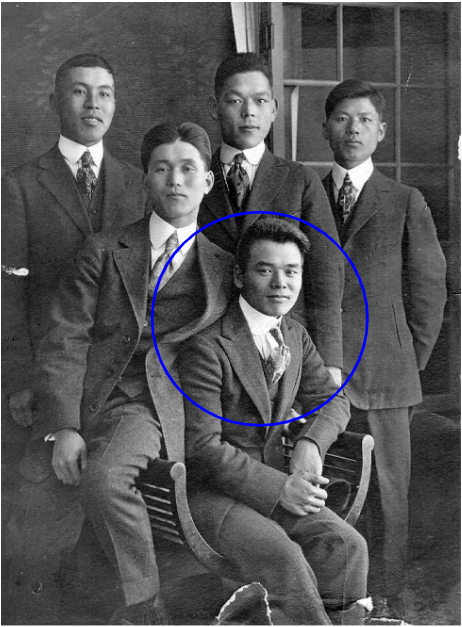
Junichi Oda, seated in chair. Photo taken before WWII.
Eventually, Junichi married my mother, a Japanese American citizen, Maki “Lorraine” from Watsonville, CA, who was stripped of her American citizenship when she married a Japanese national.
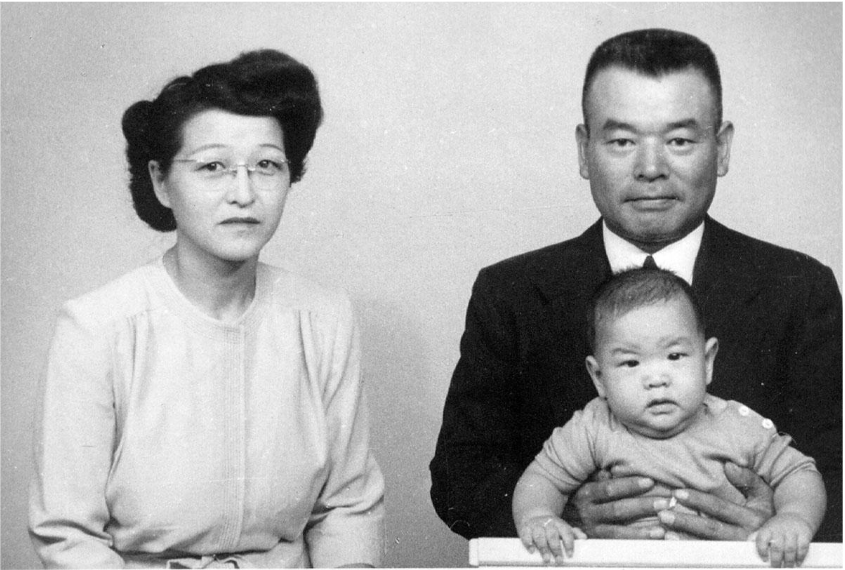
My father Junichi Oda, my mother Maki “Lorraine”, and me. I was born in the Crystal City incarceration camp in 1945.
My father worked hard and became the head of the abalone processing cooperative consisting of nine processing units on Fisherman’s Wharf in Monterey, CA. He was active in the Japanese Businessmen’s Association - the Nihonjin-kai. He also donated to the Japanese Red Cross. However, my father was never known to have any involvement with activities that were against the United States government.
After the announcement of Executive Order 9066 on February 19, 1942, Highway 99, which stretches along the length of the California Central Valley, became the dividing line between the zone of exclusion (west of Hwy 99) and the free zone (east of Hwy 99). My parents moved to Clovis, CA, to live on a farm with some other Japanese families from Monterey in the free zone. Immediately after the exclusion zone was expanded to include the east side of Hwy 99, my father was arrested at the farm by two men from the FBI on July 8, 1942, in Fresno, CA, under the Alien Enemies Act.
I do not know whether he received a hearing. I requested records of his arrest and detainment, and incarceration 20-30 years ago, but those records were not available to me at the time. My father never challenged his detention.
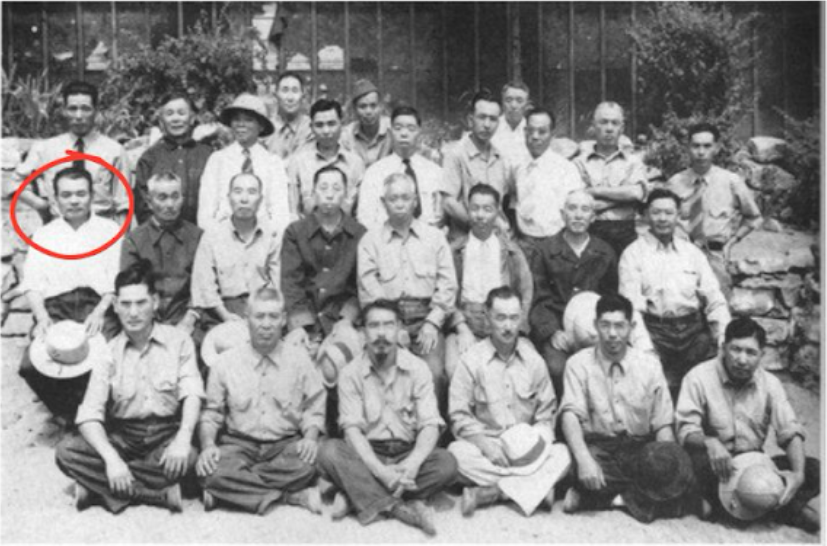
Pictured: Junichi Oda with a group at Santa Fe, sitting in the second row, far left holding his hat.
After his arrest, he was first sent to Lordsburg, New Mexico and then to Santa Fe, New Mexico and finally to Crystal City, Texas. My mother Lorraine was incarcerated later, under Executive Order 9066, and she was sent to Poston, Arizona. They reunited in Crystal City in 1944, two years after my father’s arrest. I was born in Crystal City in 1945.
During their incarceration, my mother worked in the camp as a cook. The person in charge of ordering food was given a budget to buy good beef, but chose to buy old lamb which was green, and pocketed the difference in cost.
Before the war, Japanese people controlled about 70% of Fisherman’s Wharf in Monterey. However, once the war began and the Japanese were incarcerated, others took over their roles at the Wharf. When the war ended, my father could not get his job back as the head of the abalone processing plant. For one, the abalone population had greatly declined, and he no longer had his boats. So my father chose to repatriate to Japan, hoping to make money to support me and my mother, who stayed behind in California. This was to be another period of separation for our family.
My father traveled to Japan with plans to take over the shipping company started by my grandfather. But once there, he realized that shipping boats had been confiscated by the government, raw materials like the iron fencing around the yard and copper cladding on the roof were confiscated by the Japanese Military. There was nothing for my father in Japan. He stayed in Japan until he was able to travel back to the United States to be reunited with my mother and me.
This entire experience made my whole family feel like we had to be careful to keep our noses clean and heads down, even if we did not do anything wrong. We felt that we should keep a low profile and not attract attention, so that people would leave us alone.
Written by: Larry Oda, JACL National President (2022-2026)
Want to hear about more experiences of others under the AEA? Click a name below to learn more.