
Experiences of Japanese Americans under the AEA
Natsu Saito
Natsu Saito (1898-1984), a 43-year old widow with four children, had been a legal resident of the U.S. for 25 years when, on December 9, 1941, she was arrested in Aberdeen, Washington by FBI and local police officers, without prior notice, warrant, or the opportunity to contact her children. Mrs. Saito was held at the Aberdeen city jail pursuant to the Alien Enemies Act (“AEA”) and subjected to repeated interrogations before being transferred to an immigration detention facility in Seattle a week later. She had been forced to consent to a search of both her home and the family-owned “Oriental Gift Shop.” Her two youngest children, aged 15 and 16, returned home from school to discover their mother missing and FBI agents ransacking their home and business.
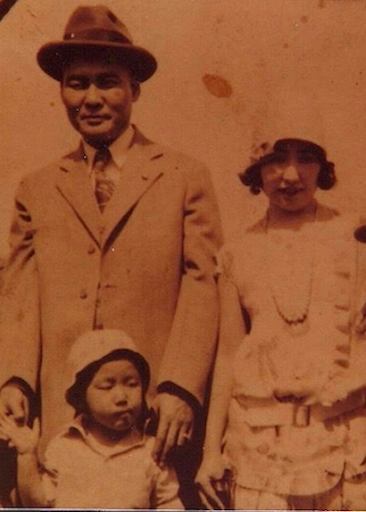
Natsu Saito with her husband Ransaku and youngest son Morse, circa 1929
Upon her detention, friends offered to take the children in, but they insisted on staying together and keeping the store running. An older son returned home from college and worked as an elevator operator to support the family. After three weeks, they finally located their mother and drove 112 miles to Seattle, planning to visit her for the first time on Christmas Day. When they got there, however, they were turned away, informed that visitors were not allowed on Christmas.
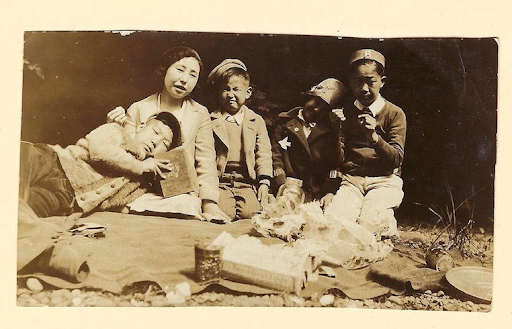
Natsu Saito having a picnic with her children Perry, Morse, Dahlia, and Lincoln, circa 1932.
Documents obtained from the FBI include numerous letters of support from friends and acquaintances in the community, Mrs. Saito’s “Alien Enemy Questionnaire,” and the transcript from a January 9, 1942, hearing held at the INS office in Seattle. A memorandum from FBI director Hoover had identified her “as a potentially dangerous Japanese enemy alien” based on unsubstantiated rumors, but the only suspicious activity noted by the Hearing Board was that she had once been asked by a Japanese national to obtain maps and news articles “that might be of interest to the Japanese government” but had “emphatically declined” to do so.
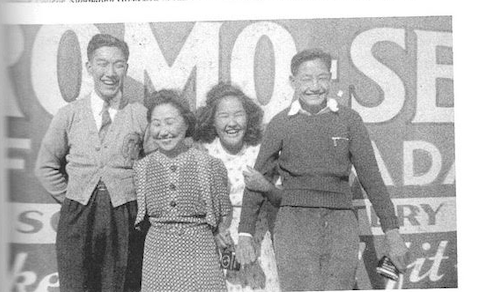
Natsu Saito with her children Perry, Dahlia, and Morse in 1942, enjoying their reunion after her release from AEA custody (and just prior to their incarceration pursuant to EO 9066). This photo is from Klancy Clark DeNevers' “The Colonel and the Pacifist.”
On January 13, 1942, the Board recommended that Natsu Saito be paroled without bond, but she was not actually released to her family until April 6, 1942, the day after Easter. Shortly after arriving home, Mrs. Saito had to travel to Raymond, Washington, to register her family for evacuation. Thereafter, they had 8 days to pack what they could carry and arrange to sell or store everything else the family owned. On June 1, 1942, they bought their own bus tickets from Aberdeen to Olympia, Washington, where armed guards put them on a train with blacked-out windows, headed to the Tule Lake War Relocation Center.
Mrs. Saito was released from Tule Lake on September 25, 1943, to move to Chicago. However, her enemy alien parole was not terminated until November 15, 1945. In the meantime, beginning in early 1945, she taught Japanese language classes to U.S. Army personnel at the University of Chicago. Natsu Saito became a U.S. citizen after the racial restriction on citizenship was removed in 1952, but the trauma induced by the process has remained with the family to this day.
Written by: Natsu Saito’s granddaughter, Natsu Taylor Saito, Regents' Professor Emerita, Georgia State University College of Law.
*****
References:
Natsu Saito’s story was told in the book: Klancy Clark de Nevers, The Colonel and the Pacifist: Karl Bendetsen, Perry Saito, and the Incarceration of Japanese Americans during World War II (Univ. of Utah Press, 2004).
Want to hear about more experiences of others under the AEA? Click a name below to learn more.